

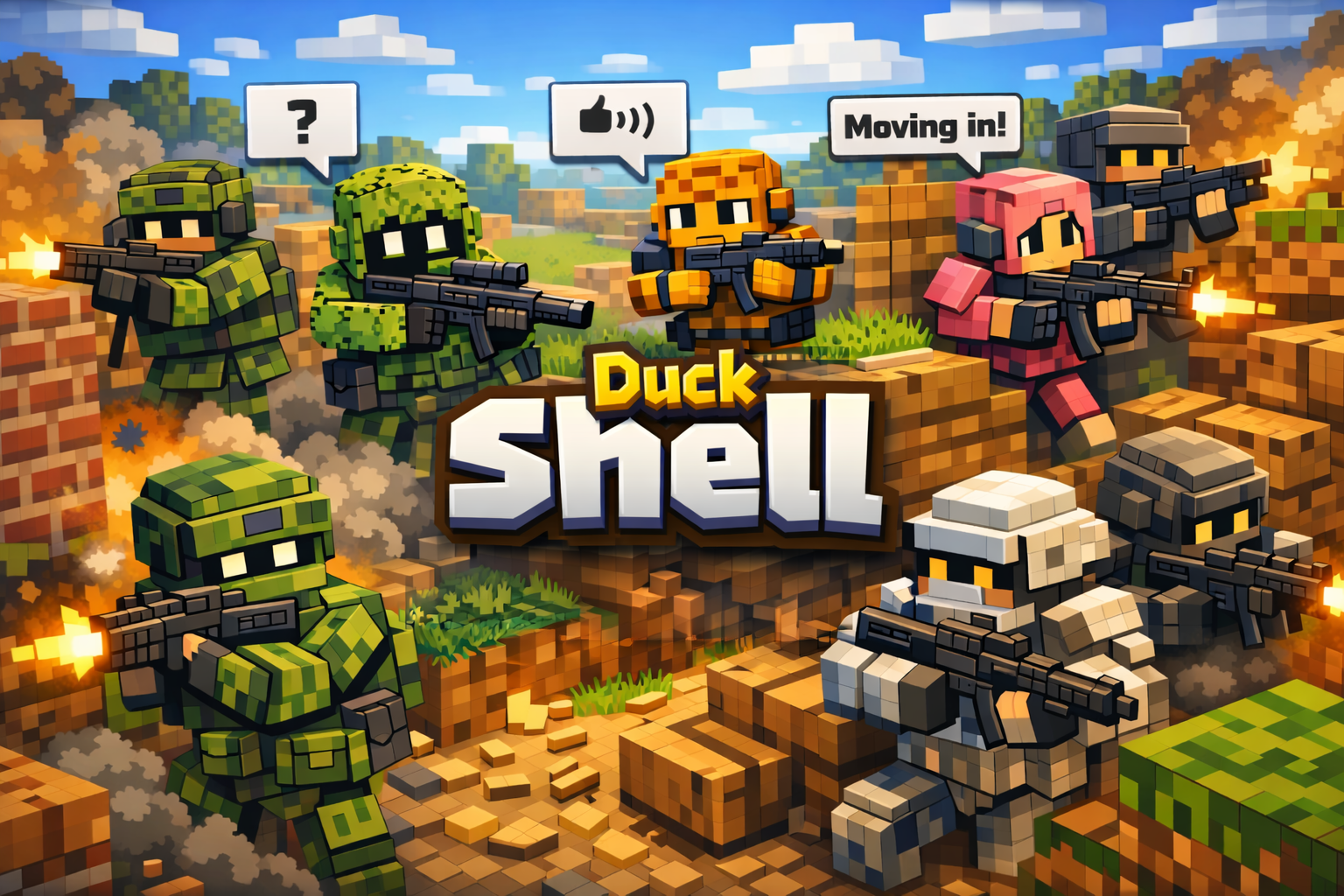


DuckShell NPCs background
Core pluginBetaDuckShell Suite
DuckShell NPCs icon

DuckShell NPCs

The main DuckShell NPCs page for encounters, behavior setup, docs, and beta release tracking.

Build patrol-driven encounters, ambient squads, and world-populated hostile or passive shell types from the same engine.
Separate shell definitions, patrol routes, and spawners so encounter design stays organized as the server grows.
Keep admin control close with AI director tooling, debug routes, and live tuning surfaces.

Runtime

Paper 1.21.10 / Java 21

Soft dependencies

Citizens, LibsDisguises, ProtocolLib, PacketEvents, Duckshot, MCWAR-SoundLogic

Admin tools

config.yml, patrols.yml, spawners.yml, AI Director, in-game editors

Stage

Beta release

Latest release

DuckShell NPCs

The main DuckShell NPCs page for encounters, behavior setup, docs, and beta release tracking.

  • Build patrol-driven encounters, ambient squads, and world-populated hostile or passive shell types from the same engine.
  • Separate shell definitions, patrol routes, and spawners so encounter design stays organized as the server grows.
  • Keep admin control close with AI director tooling, debug routes, and live tuning surfaces.
Browse plugin directory

Overview

What this plugin covers

DuckShell is built for servers that need more than static NPCs. It covers shell types, patrol paths, spawn orchestration, combat behavior, dialogue surfaces, and the admin tools that make those systems usable on a live server.

The plugin is strongest when it is treated as an encounter platform. Patrols, spawners, and shell definitions each have their own job, so hostile squads, ambient defenders, and presentation NPCs can all live in the same stack without turning into one giant file.

  • DuckShell is meant to power encounters and world population, not just spawn a few decorative NPCs.
  • Patrols, spawners, shell types, and AI overrides stay separate so live tuning is practical.
  • The Duck Shot-first combat bridge keeps NPC combat in the same language as the rest of the server.

At a glance

  • Build patrol-driven encounters, ambient squads, and world-populated hostile or passive shell types from the same engine.
  • Separate shell definitions, patrol routes, and spawners so encounter design stays organized as the server grows.
  • Keep admin control close with AI director tooling, debug routes, and live tuning surfaces.

Compatibility and setup

Runtime

Paper 1.21.10 / Java 21

Soft dependencies

Citizens, LibsDisguises, ProtocolLib, PacketEvents, Duckshot, MCWAR-SoundLogic

Admin tools

config.yml, patrols.yml, spawners.yml, AI Director, in-game editors

Stage

Beta release

Guided sections

Plugin guide

DuckShell purpose banner

Purpose

DuckShell turns NPCs into a real encounter layer

This is where ambient world population, patrol pressure, combat squads, and authored NPC behavior all meet.

DuckShell is not only a spawn utility. It is the system that makes NPC presence feel planned. Shell types define identity, patrols control movement, spawners decide when and where encounters appear, and the AI layer keeps those parts reacting like they belong to the same world.

That gives server owners a lot more freedom. You can build combat-heavy events, passive world atmosphere, guarded compounds, or live patrol routes without replacing the platform every time the design gets more ambitious.

What the engine is built for

  • Player-style NPCs that feel alive in the world instead of parked in place.
  • Patrol and spawner logic that can scale from a few guards to a broader encounter network.
  • Combat, presentation, and operator workflows kept inside one stack.

DuckShell quickstart banner

First Boot

Start with one shell, one patrol, and one spawner

The clean rollout is to prove the file split first, then add personality and combat once the NPC loop is healthy.

DuckShell gives you a readable first-boot surface: config.yml for global rules, patrols.yml for routes, and spawners.yml for how encounters actually enter the world.

TEXT
plugins/
  DuckShell/
    config.yml
    patrols.yml
    spawners.yml

The best first milestone is small. Spawn one shell type, bind it to one patrol or fixed point, and prove one spawner before you try to build a whole compound. Once that simple loop is healthy, the rest of the encounter stack becomes much easier to trust.

YAML
spawners:
  southern_proxy:
    shell_type: fcore_southern_proxy_passive
    patrol: perimeter_loop
    respawn_seconds: 45

What a healthy first boot proves

  • The plugin generated its runtime files and registered the admin surfaces cleanly.
  • One shell can spawn, persist, and follow the expected route or point.
  • The first encounter loop is predictable enough to grow from.
DuckShell engine banner

Engine To Build On

The engine stays organized because shell types, patrols, and spawners are separate

DuckShell works well on live servers because the core encounter pieces do not all live in the same place.

Shell types define identity and AI overrides. Patrols define movement. Spawners decide when those shells appear and how the world stays populated. The AI Director sits above that structure to keep the broader runtime manageable.

That split is what allows the plugin to scale. A shell definition can be reused by several spawners. A patrol route can support different shell types. An operator can tune global combat rules without reauthoring every NPC one by one.

Why the engine structure matters

  • Content stays reusable instead of getting buried inside giant one-off configs.
  • AI tuning and encounter placement can evolve independently.
  • Operators can reason about the system quickly when a live server needs changes.
DuckShell standout features banner

Standout Features

The standout feature is how many world roles the same engine can cover

DuckShell can power ambient NPCs, pressure squads, patrol guards, and presentation characters without feeling like several plugins tied together.

The live feature surface spans shell types, patrol editing, spawner workflows, Duck Shot combat behavior, presentation layers, nameplates, dialogue, hints, cover logic, no-line-of-sight behavior, and operator-facing debug routes.

That makes DuckShell useful for more than one server genre. A combat-heavy server can build squads and defended spaces. A worldbuilding server can use shell types, dialogue, and presentation without touching the more aggressive combat lanes.

Where the plugin stands out

  • Combat behavior and world presentation can live inside the same stack.
  • Patrols and spawners give encounter designers better control than fixed NPC placement alone.
  • The Duck Shot-first combat bridge helps NPCs feel native to the rest of the world.
DuckShell performance banner

Built For Live Ops

DuckShell is built for live tuning, not only lab demos

Encounter engines need control. DuckShell gives operators places to tune the runtime instead of burying everything inside NPC-by-NPC edits.

The plugin keeps global rules in the AI Director and file map while preserving room for per-shell overrides. That is a healthier model for live servers than forcing every behavior change through every NPC template individually.

It also helps when troubleshooting. You can inspect patrols, spawners, AI behavior, and combat bridges as separate lanes, which makes it much easier to find the real problem when an encounter feels wrong.

Why the runtime stays manageable

  • Global tuning and per-shell overrides are clearly separated.
  • Patrol, spawner, and combat issues can be isolated faster.
  • Debug and live-ops routes are already part of the product surface.
DuckShell showcase banner

Showcase

Show the encounter, the patrol tooling, and the finished world scene

DuckShell sells best when the page proves both the AI behavior and the world-building value.

A strong gallery should show one active encounter, one operator or patrol surface, and one finished in-world scene where the NPCs feel like part of the environment rather than a test spawn.

That mix shows buyers exactly why the plugin matters: it looks good in the world and it gives admins enough control to keep it healthy.

What the gallery should prove

  • NPCs move and react like part of the world.
  • Operators have a real workflow for controlling the system.
  • The finished encounter scene feels intentional and believable.

Preview Gallery

Real screenshots and in-server proof for this section.

Preview slot

Live encounter

A squad or patrol shot that shows spacing, posture, and world context.

Preview slot

Operator workflow

A patrol, spawner, or AI surface that proves the system is maintainable.

Preview slot

World scene

A polished in-world shot where the NPC layer sells the space.


